This is a beer I brewed earlier this year primarily for a HomebrewTalk post about fruited IPAs. The batch was infected and I dumped the entire six gallons. The only silver lining is that I didn't waste more hops on a second dry hop.
A long time ago Jennie and I set up a Twitter account for our home brewery. Every now and again I get Twitter alerts for that account. One day I received an alert for a tweet with a link to a Beer Advocate thread entitled: "Is West Coast IPA still relevant?"
My answer is yes, of course it is! Some drinkers are so into and obsessed with New England Pale Ales and IPAs that perhaps those drikers feel that West Coast IPAs may no longer relevant. Some are so involved in their beer geekdom that they forget that not every craft beer drinker wants to wait in line at or trade for Tree House or Trillium. The craft beer drinkers that buy beer at a store are still buying plenty of West Coast and Midwest IPAs.
Modern West Coast IPAs from the San Diego area and New England IPAs are more similar than they are different. Neither type of IPA is overly bitter and both are highly aromatic. If you served a San Diego IPA and a Vermont IPA to a blind-folded drinker that hunts "whalez", that drinker would have a harder time than they would think discerning the difference in flavor between the two. In one blind tasting I actually preferred Port Wipeout IPA, a San Diego IPA that goes for $7 a bomber, to Heady Topper. Beer drinkers in general need to be more aware that they don't know what they don't know, and that Beer Advocate, RateBeer, or Untappd ratings are everything.
Digressing to my brew day, I dry-hopped my last New England IPA so aggressively that my three gallon batch only resulted in 24 bottles. As happy as I was with it, the beer went quickly. I needed to make another IPA soon. As much as I wanted to make another New England IPA, I already had most of the hops I needed to make another batch of Broken Fist. When I think of Southern California I think of sunshine. With summer coming, a SoCal-inspired IPA will hit the spot.
I have always hopped Broken Fist a little bit like a New England IPA with a small dry hop addition toward the end of active fermentation. That first dry hop is smaller than I would employ with a New England IPA, but it's there to boost up the hop flavor.
Beyond the hopping, Broken Fist is more of a conventional West Coast IPA. In my West Coast-inspired IPAs like Broken Fist and The Anti-Chris, I still use water high in sulfates to yield a beer that is dry and accentuates the hop flavor, whereas in my latest New England IPA I flipped convention on it's head and brewed with water high in chlorides. I use generic US 2-row malt for the most part, and WLP090 San Diego Super yeast to produce a purely hop driven beer. And yes, I use kettle finings in my West Coast IPAs to try and make a beer that is reasonably clear.
I brewed an all-grain, six gallon double batch. I employed the same double boil that I did for the North Shore Brewers Wee Heavy. After primary fermentation, I am going to split the batch. Half of the batch will be dry hopped as normal, while I will add grapefruit peel to the other half. The split batch will be for a post on another website. Citrus IPAs and pale ales aren't going anywhere, so I may as well try to make one.
Follow me on Twitter @JChalifour
Like The Would-be Brewmaster on Facebook
Showing posts sorted by relevance for query broken fist. Sort by date Show all posts
Showing posts sorted by relevance for query broken fist. Sort by date Show all posts
Wednesday, December 6, 2017

Monday, November 13, 2023
Ales over ALS 2023
One thing I have always understood is that life is about choices. Humans have to make an innumerable amount of choices on a daily basis. Every once in a while we are confronted with important decisions. Lately it feels like my batting average on these important decisions is below the Mendoza Line.
Anyway, this all started at the end of September at a North Shore Brewers club meeting. Club Vice President Tim Broderick listed off the club members that had volunteered to brew for the upcoming Ales over ALS competition and event. As Tim read off the names, participation felt light. I haven't brewed for the event since before the pandemic. In 2021 and 2022, I served as a judge and was penciled in to judge again in 2023. After a few beers, I told Tim "If you need me to pour beer instead of judge, let me know". Then I completely forgot about volunteering until Tim messaged me a few days later.
 |
| Broken First IPA and Potrero Hill Porter |
Now, my history at this event has been fraught. I've had near-misses where I've brought solid beers and almost won the People's Choice and the Judge's Choice. I've also brought a beer and a cider that were completely trashed by the judges. Deserved or not, it stung and I left the event enraged and embarrassed. If I was going to pour and compete again at this event, I was going to put my best foot forward.
At the time I volunteered, I had two beers on tap: an extract version of my Derby Wharf Porter and Inverted Fest. Neither beer was terrible, but neither were great. The porter was under-hopped because I used homegrown hops and guestimated the bitterness. The marzen was an experimental recipe that missed the mark.
That meant I had to brew at least one new batch, and I had to brew right away!
Wednesday, July 13, 2016
Brew Day: US of IPA – Broken Fist IPA (West Coast IPA)
The US of IPA is a project where I will brew four regionally inspired American IPAs. I will be pouring all four at the North Shore Brewers tent New England Homebrewers Jamboree. Jamboree is an event open to the public to benefit Make a Wish. Tickets are available here.

Regional IPA sub-styles are a funny thing. There are and have been brewers on the West Coast making pale, hazy, and hoppy ales not unlike New England IPA. One of the most highly regarded IPAs in the Midwest, Modus Hoperandi by Ska Brewing is as dark in color as any East Coast IPA. For a while on the East Coast any IPA that was aggressively hopped and/or bitter was marketed or described as a "West Coast IPA" as a way to differentiate the beer from the darker, more balanced, and more English in character IPAs that were prevalent on the East Coast.
Somewhere along the line I had it in my head that a West Coast IPA was supposed to be bitter. There certainly are prominent examples that are like Sierra Nevada Tumbler, and most of the IPAs produced by Stone. I was surprised during the Regional American IPA: What's Up with All the Crystal Malt seminar at Homebrew Con when Paul Sangster, co-owner of Rip Current Brewing in San Diego described the IPAs in San Diego as being low in bitterness and high in aromatics. I actually stepped to the microphone during the end of the seminar for the Q & A session to ask about this dichotomy. Sangster's short answer was that the bitter West Coast IPA was falling out of favor to a degree, at least in the San Diego area, as less bitter and highly aromatic IPAs are becoming increasingly popular. It reminded me of how hazy New England IPAs are gaining in popularity compared to the traditional East Coast IPA.
The first batch of Broken Fist IPA was so good and so well received by everyone on Memorial Day weekend the consensus was that I had to brew it again. During the seminar the characteristics of IPAs in San Diego Sangster described matched Broken Fist perfectly. I had brewed an example of the style without even knowing it! It is the perfect West Coast IPA to brew for my US of IPA project. . I scaled up the recipe to a six-gallon batch. I plan to bring three gallons of each IPA to jamboree, but I want to have plenty of Broken Fist to share with friends who won't be at jamboree and to enter into competitions.
The only way I could brew six gallons in my apartment would be to brew two separate three gallon batches. That would be an eight to nine-hour brew day. No thanks! I texted Andy about having another brew day, but only a few weeks after he brewed The Commonwealth vs. Chalifour, and having a newborn, it was probably too soon to for another brew day at "Cabot Street Brewery". Luckily, Adam loved the original Broken Fist so much, he volunteered his backyard. I packed up all my gear just like I had for the North Shore Brewers beer camp.
I made a few additional tweaks from the original recipe for batch number two. I was also able to buy eight ounces of Citra hops for this batch, while I had to make due with only two ounces for my previous three-gallon batch. I want this batch to have an even more assertive hop aroma. Beyond the additional dry hops, I am increasing the bitterness just a little bit as I thought the only flaw in the first batch was that it was slightly sweet.

For water I used all distilled and added salts to get the water profile exactly as I wanted it. I did this for a few reasons: I don't know the water profile for Peabody like I do for Beverly, the water in San Diego is very soft, and I wanted to be sure high chloride water wouldn't make the beer too malty.
After loading and unloading all my gear, the brew day itself was okay. We spilled some spent grain which attracted a bunch of birds to Adam's backyard. I forgot to bring a thermometer, so I couldn't check my mash temperature and I estimated the temperature of my sparge water. I trusted Beer Smith's calculations and just let the mash sit in my modified cooler. After sparging I filled my eight-gallon kettle almost to the very top. I watched that kettle like a hawk to make sure the wort didn't boil over onto Adam's patio.


I used a batch sparge. Essentially I added a little more than half of the water I needed to the mash, stirred the mash once it was done, drained it as quickly as possible, added my sparge water, stirred, and drained again. Whereas when I brew with Andy we will fly sparge, and slowly sprinkle the sparge water over the grain bed like a coffee maker.

My original gravity and volume were both short. I ended up with a little over five gallons. I don't think I took the volume of hops into consideration enough. This was only my second batch with my cooler and propane burner. It is a matter of getting used to my system which will happen the more I use it. As I was running my wort chiller it started to sprinkle. I moved the wort into the fermenter, brought it home, and used my trusty swamp bucket to bring my wort down to fermentation temperature before pitching my yeast.
One down, three to go! I will probably brew my three other IPAs in my apartment as three-gallon brew-in-a-bag batches. Hopefully the heat isn't oppressive when I do.
Click here for the recipe.
Follow me on Twitter @JChalifour
Share what beers you are drinking with me on Untappd
Wednesday, April 27, 2016
Brew Day: Wisconsin Belgian Red Clone (Fruit Beer)
Two years ago we traveled Jennie's native Wisconsin to visit her family. Her family lives in Chippewa County, about a twenty minute drive from the Leinenkugel's Brewery in Chippewa Falls. During our week in Wisconsin we did as much sight-seeing as we could. We visited the Leinie Lodge and toured the historic Leinenkugel's brewery, we drove across the state to Green Bay to take a tour of Lambeau Field. On another day we drove even farther to the tiny town of New Glarus to stop by the New Glarus brewery.
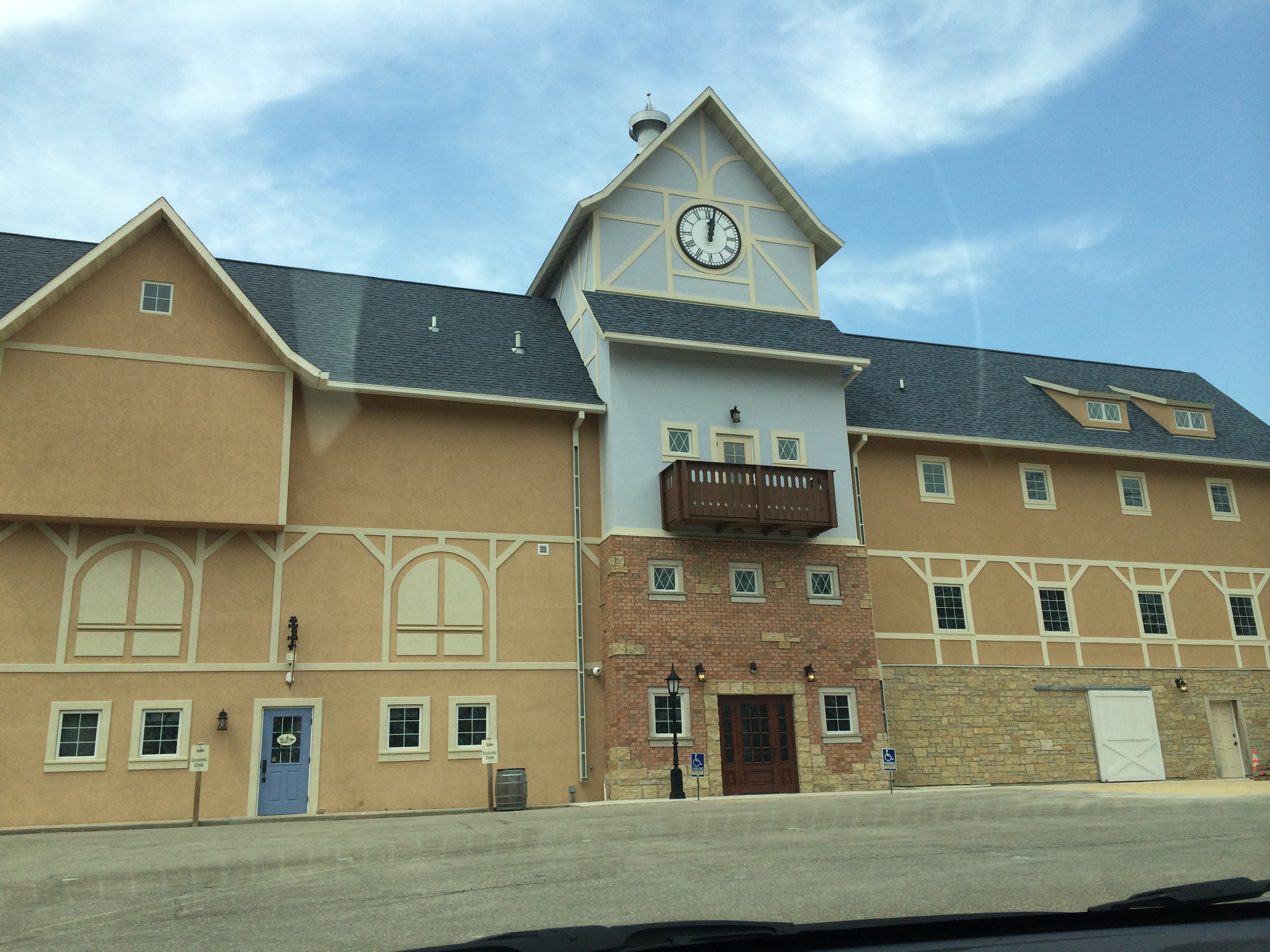
According the the Brewers Assoication latest Top 50 ranking of craft brewery sales, New Glarus is the 20th largest craft brewery in America. New Glarus ranked ahead of brewers like Abita, Anchor, Victory, Long Trail, Shipyard, Rogue, Left Hand, and Allagash. What makes this astounding is that New Glarus only distributes in the state of Wisconsin. The slogan on the main page of their website is literally "Only in Wisconsin"

Last year a bar in neighboring Minnesota bought several kegs of New Glarus' venerable Spotted Cow in Wisconsin, put it on tap at the bar, was caught doing so, and the owners are facing criminal charges.
The drive from Jennie's parents house to the brewery was around three hours. The massive and immaculate brewery is on top of a large hill. The town of New Glarus is named after the Swiss village of Glarus. Both the town and the brewery have a distinctive Alpine character. The brewery looks like a giant cuckoo clock.
We enjoyed a sample flight, went on the self-guided tour, and bought a ton of beer to take home. I carefully loaded 18 bottles into my checked bag. It felt like it was full of bricks. All of the beer made it home safely, and there was a nice note from the TSA that my back had been "randomly" checked.
Out of all of New Glarus' beers, my favorite might be Wisconsin Belgian Red. It is a crisp, super drinkable cherry beer that perfectly straddles the line between a cherry beer and a cherry wine. When I told Jennie I was going to brew Broken Fist IPA for my cousin Adam, she correctly pointed out that I would also need to brew a beer for Adam's wife Kristen. I know Kristen enjoys ciders and fruit beers. This is the perfect opportunity to brew a clone of Wisconsin Belgian Red.
Unlike BrewDog and Stone, New Glarus is notorious for carefully guarding their recipes, ingredients, and brewing processes. Co-owner Daniel Carey has in the past said he did not want to disclose any "trade secrets". The brewery's guarded nature, and stubbornness in only distributing in Wisconsin, has only enhanced their mystique.
Luckily for me Amahi Turczyn Scheppach published a clone recipe in the July/August 2007 issue of Zymurgy. Using the volume of cherries New Glarus uses in the commercial version would be quite expensive. Scheppach added cherry juice to his beer to avoid having to clean and pit ten pounds of fresh cherries. He played around with the ratio of cherry juice and beer to get a pronounced cherry flavor, aroma, and color, without spending a small fortune on cherry juice.
I brewed the beer the same day as Broken Fist IPA. To save time I brewed an extract batch. With all of the cherry juice that is going to be added, the beer would have been dark even if I brewed it with all-grain. I steeped my specialty grain for this beer, started mashing Broken Fist as the Belgian Red was starting to boil. I dumped my concentrated wort into the fermenter just in time to transfer Broken Fist into my boil kettle.
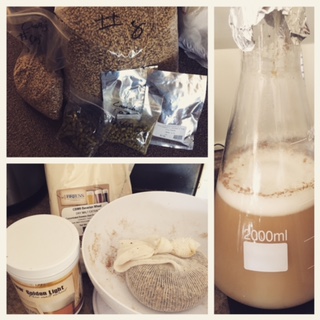
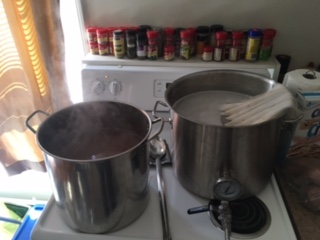
I chose a dry yeast, Safbrew T-58. I haven't any witbiers since last spring, or other Belgian styles since the previous summer. I didn't make time to build up any yeast from my yeast bank. I'm also interested to try the dry yeast and see what kind of yeast-derived flavors I get. The wort was fermenting within several hours. Dry yeasts can lag up to two days, so I'm impressed already. The quicker a beer starts fermenting, the better.
If I serve this on Memorial Day, I won't have time to lager the beer on oak like New Glarus. This beer was so easy to brew, I could easily make it again and age it on the oak. I did make a five gallon batch. I'm kegging three gallons for Memorial Day and saving two gallons for us.
To view the recipe in the July/August 2007 issue of Zymurgy, join the American Homebrewers Association for a free subscription to the magazine and online access to the Zymurgy archives going back to 2000.
Follow me on Twitter @JChalifour
Share what beers you are drinking with me on Untappd
Tuesday, September 20, 2016
Tasting Notes: The United States of IPA
I am terrible when it comes to posting tasting notes for my beers. I’m lucky if I get around to writing up my impressions on half of my batches. In the future I think I’ll do some catch-up pieces where I write some quick impressions of several beers.
The US of IPA is the perfect time for me to test out this concept. I brought the beers to Jamboree, and with all that goes on at Jambo I didn’t exactly have time to hold each beer up to the light to note the appearance, and then swirl the beer around to rouse the head and make a detailed description of the aroma.

Broken First IPA (West Coast IPA): I think I nailed the recipe. The extra Citra that I didn’t have for batch one gave the beer a much more prominent hop flavor. I ran into a coworker who was attending Jambo for the first time. He tasted all four of the beers and enjoyed this one the best.
Dave Rowland from SoMe Brewing said he got a very low level of oxidation from it. Oxidation may be an off-flavor he is more sensitive to than others, especially as a commercial brewer. Broken Fist was the only beer of the group that I racked to a secondary fermenter which could explain the oxidation Since the beer was double dry-hopped, I didn’t want the beer sitting on the first dry hop for too long. Broken Fist was also the first of the four that I brewed making it the least fresh.
To improve the beer going forward is more about improving my process than the recipe. Dave said when I think I purged my keg with CO2 enough, to go ahead and purge some more. If I rack to a secondary fermenter, that should be purged also. Next time I would need to brew more wort to account for the huge amount of hop absorption.
Ideally I would cold crash the beer and use a fining agent like gelatin to help with clarity.

Age of Sail IPA (East Coast IPA): This beer proves that an IPA can showcase a rich and complex malt profile. I learned at Jamboree that Stone Path Malt while based in New England that the malt is actually malted in Germany at a family-owned malthouse in Bavaria. Even if the malt doesn’t have a New England terrior, the traditionally produced malts were perfect for this traditional IPA. Michael Scroth, co-founder of Stone Path really enjoyed the beer. I look forward to using their products more in the future. The Ringwood Ale yeast with its medium attenuation accentuated the malt flavor perfectly.
Hop bitterness was sufficient, while the hop flavor was perhaps a touch low. If I brewed this again I would probably substitute the Mt. Hood hops for Crystal or Cascade, increase the hops late in the boil and dry hops slightly. For a first brew I was quite happy with it. The 3 gallon keg kicked at Jamboree. It is comforting to know I am not the only person who still appreciates a more traditional, balanced IPA.

Flyover IPA (Midwest IPA): Not only was this the last recipe I finished putting together, it was the last name I came up with. I wish I did a little more research on the name as there are several commercial beers with the same or similar names.
The beer itself is rock solid and felt like a quality representation of Midwest IPAs. It was hoppier than Age of Sail, and maltier than Broken Fist. The underlying malt flavor was clean and slightly sweet. It was also not too sweet that the mash clashed with the citrusy hop flavor. I think the hop profile was perfect for this beer. Flyover was the only keg not to kick at Jambo. I look forward to revisiting it again and seeing if I enjoy it as much as I did at Jamboree.
Haze for Daze IPA (New England IPA): I couldn’t have been happier with this brew. It had the characteristic “juicy” hop flavor and soft mouthfeel. I think increasing my flaked adjuncts really enhanced the latter.
I got similar fruit esters from the Giga Yeast Vermont Ale yeast as I’ve gotten from Heady Topper and beers I’ve made with The Yeast Bay’s Vermont Ale. That really complimented the fruity hops used in the beer. The Pearl malt gave the beer a light sweetness which added further complexity.
This beer is another keeper. I would love to brew exactly the same recipe, but with three different hops varieties.
In all I would say the project was a success. I was able to brew with a wide variety of different ingredients, combine different flavors, and make four unique beers that all fall within the same style.
Follow me on Twitter @JChalifour
Like The Would-be Brewmaster on Facebook
Share what beers you are drinking with me on Untappd
from WordPress http://ift.tt/2dhkL9n
via IFTTT
Wednesday, June 1, 2016
Tasting Notes: Broken Fist IPA (American IPA)
It seems like whenever I brew something that comes out exactly how I wanted, or is at least pretty close to how I wanted, the beer is gone in a day. This was what happened when Andy and I brewed the first batch of Pa's Video Board Lager. The extended Chalifour family kicked the five gallon keg in less than a day. This was also the case with my three gallon batch of Broken Fist IPA.
I brewed exactly three gallons, just enough to fill one of my three gallon kegs. Without the ability to chill and force carbonate, I added some priming sugar to the keg and carbonated the beer naturally. Even when keg-conditioning I typically like to purge the kegs with CO2 to help the beer maintain as much freshness and eliminate as much oxygen in the keg as I can. Sure enough, my CO2 tank ran out of gas on packaging day. All I could do was fill it up, prime, and hope for the best.
On Memorial Day weekend I picked up ingredients for my next collaboration with Andy, and swapped out my tank to serve Broken Fist and the Wisconsin Belgian Red clone on Sunday. When I tapped those kegs it was the first time I had tasted the finished product of either beer. I was scared that something went wrong during conditioning and the beers could be infected. I made sure to bring a case of Newburyport beer as backup.
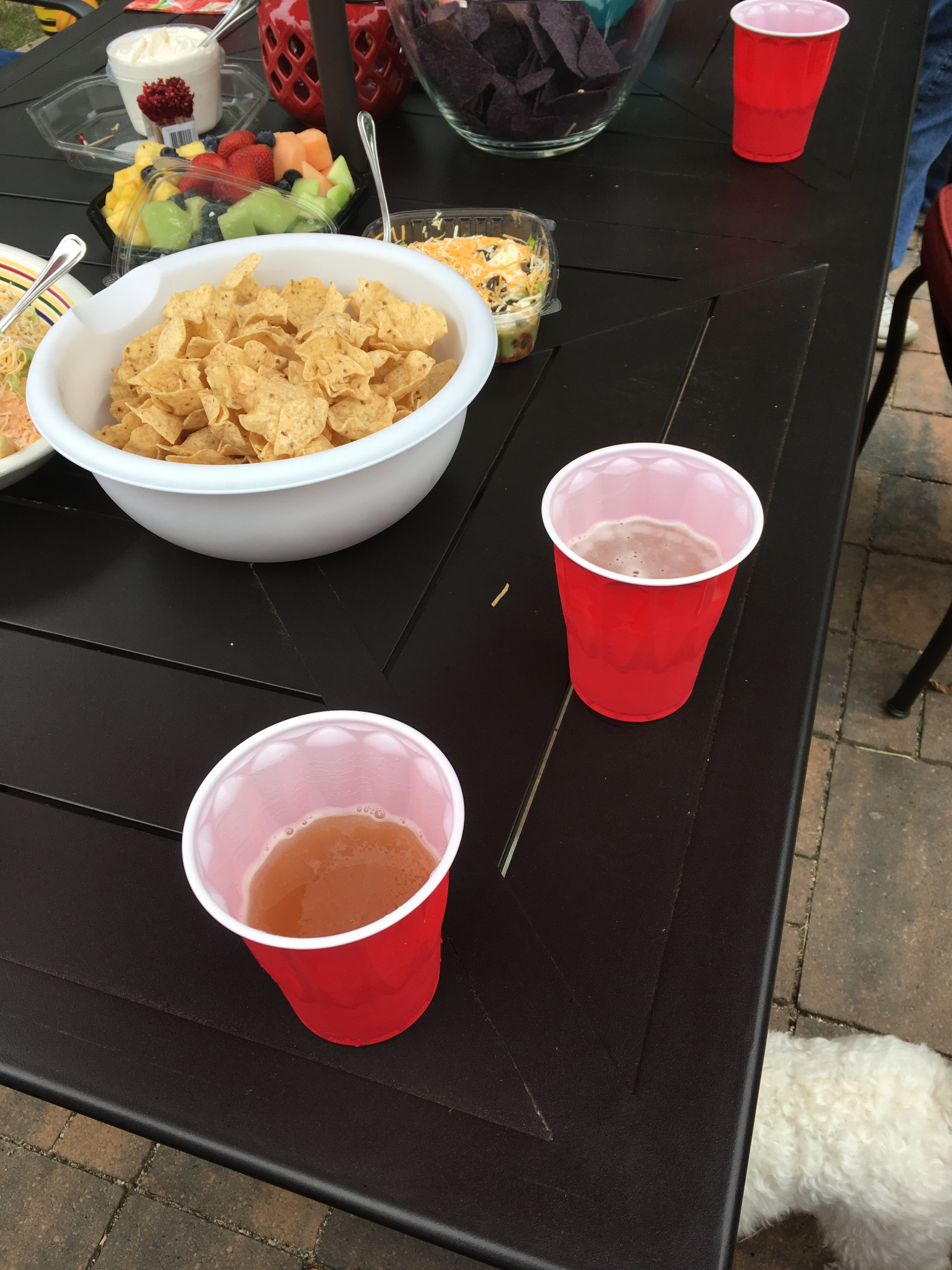
After the first foamy solo cup, the beer had a nice carbonation and hop aroma. I couldn't escape the feeling that the hop aroma would have been more pronounced if I had purged the keg. The beer wasn't too bitter, and had a nice balanced mouthfeel. If anything, the beer could have used a touch more hop bitterness. The hop flavor was citrusy, while the malt provided enough balance. The fermentation character was nice and clean. The hops were the star, and the beer did have a "West Coast IPA" feel.
I grabbed a tasting glass so I could see the beer before it was all gone. The color was on point. The clarity was disappointing. I think I need to start using gelatin, or biofine as Jennie doesn't eat red meat. I disassembled my jockey box, and soaked all the lines in a hot cleaning solution. Ideally I would have run the solution through the lines. That might have also caused haze in the beer as well. The beer tasted fine. The appearance is just something the perfectionist in me wants to improve.
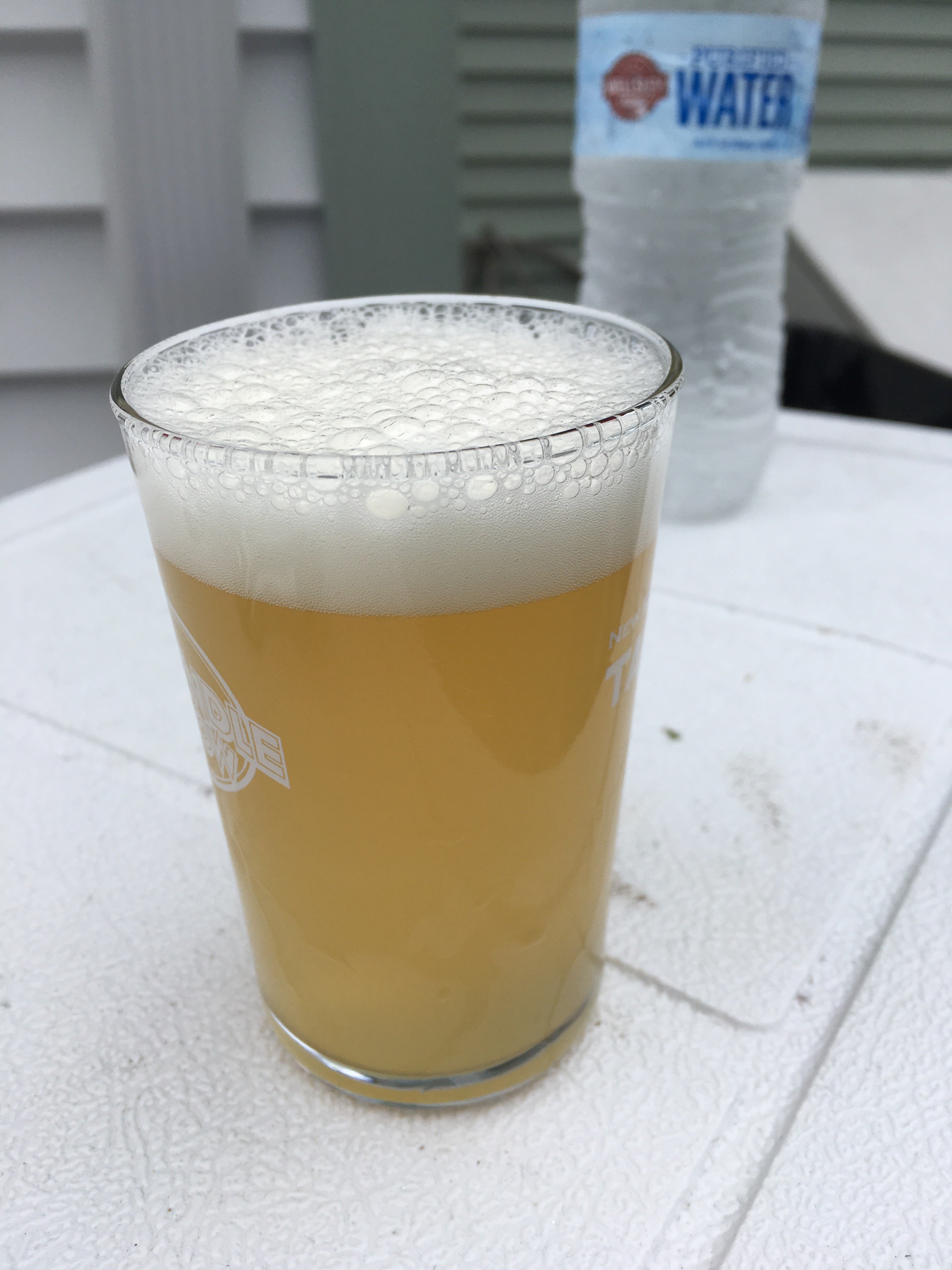
Adam loved the beer. Andy stopped by later on and enjoyed the beer too. My future cousin Corey filled up his red solo cup multiple times. The consensus was this beer is a keeper. I might increase the hop rates a little bit, but the bones of a new house beer are definitely there.
Give me a hell yeah!
Follow me on Twitter @JChalifour
Share what beers you are drinking with me on Untappd
Tuesday, April 26, 2016
Brew Day: Broken Fist IPA (American IPA)
I came of age in the heyday of professional wrestling. This was the era of the Monday Night Wars as Vince McMahaon's World Wrestling Federation (now World Wrestling Entertainment or WWE) battled for TV viewers, and ultimately survival, with Ted Turner's World Championship Wrestling (WCW). Nothing pushes boundaries, innovation, and creativity more than competition. This competition fueled an era of popularity of professional wrestling that hasn't been approached since called The Attitude Era.
During The Attitude Era, the WWE got away from the cartoonish characters the company was known for in the 1980s, as a newer starts pushed the envelope. The biggest star of this era, (Sorry Rock) was Stone Cold Steve Austin. Stone Cold would climb up onto the second rope, someone would toss him cans of beer, and he would crush "Steveweisers".

During The Attitude Era, Stone Cold would usually crush a light American Lager. At a time when Stone Cold merchandise was everywhere, there were plans to develop a Stone Cold beer. Unfortunately, those plans never came to fruition.
Stone Cold's wrestling career was ultimately cut short due to a neck injury. After retiring from wrestling, Austin has pursued several interesting projects such as acting, hosting the reality show Redneck Island on CMT, creating and hosting reality competition series, The Broken Skull Challenge, and the excellent Steve Austin Show podcast on Podcast One. Also during his retirement, Austin began branching out as a beer drinker beyond the light lagers the Stone Cold character was known for. Over time Austin developed a love for craft beer, IPAs in particular, which gave him the itch again to create his own beer.

"The Texas Rattlesnake" as Austin was also known during his career, now goes back and forth between his Broken Skull Ranch in Texas, and a home in the Los Angeles area. After reaching out to breweries in both Texas and California, he collaborated with El Segundo Brewing on Broken Skull IPA. The beer has gotten positive reviews and currently has a 3.93 rating on Untappd. It is currently distributed in Southern California, and available for sale online in states where it is legal to ship beer. In Massachusetts it is not.
Right around time the beer came out, my cousin Adam who is also a huge wrestling fan, purchased his first home. He was disappointed he couldn't have Broken Skull IPA shipped to Massachusetts, but I thought if I made a version of Broken Skull IPA it would be a perfect beer to brew for his housewarming party. Adam was on board with the idea, but wanted to wait until Memorial Day weekend to have a lot of people over.
Austin had Rob Croxall, the owner of El Segundo brewing as a guest on his podcast. They talked about how they developed the beer, the ingredients used, and the flavor and aroma they were going for. Based on that, as well as comments and photos on Untappd, I put together a recipe.

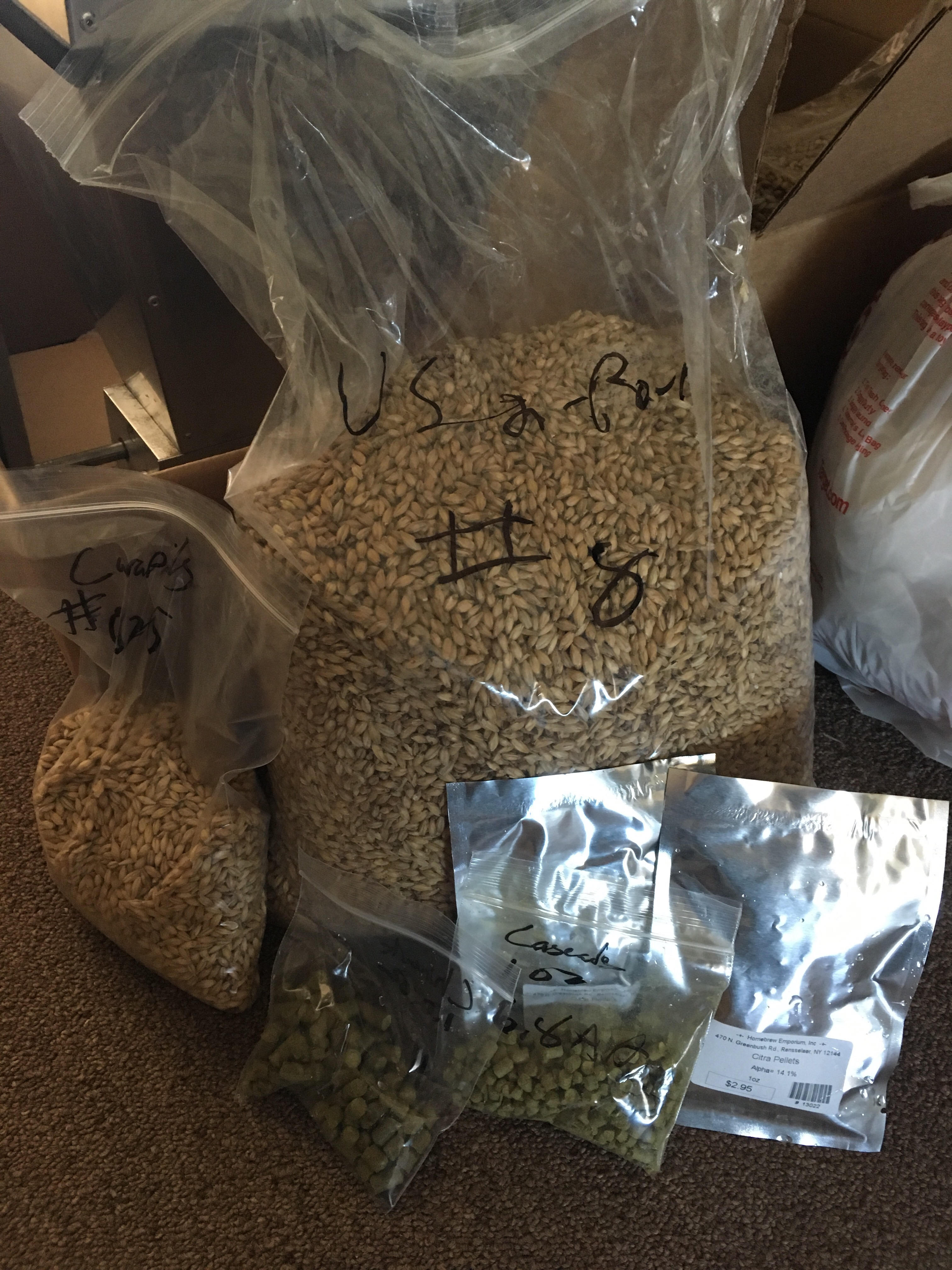
I bought my ingredients locally after dropping off a couple of competition entries. The shop had a limit of 2oz per person of Citra hops due to their scarcity. I had make a couple of minor tweaks to the recipe to compensate.
Initially I was going to use Chico yeast, Safale S05, However, after reading one of my favorite brewing blogs, Brulosophy, rave about WLP090 San Diego Super Yeast, I thought this would be the perfect recipe to use it for the first time. The attenuation is as good, if not better than Chico which should help make sure the beer is dry enough to let the hops shine through. It also floccuates much better, which should make the finished beer clearer. I don't want this West Coast IPA to be hazy like Fort Dummer or Alan's Stepchild. I don't know if I will be able to match the brilliant clarity of the commercially produced version, but I want to be as close to it as I can.
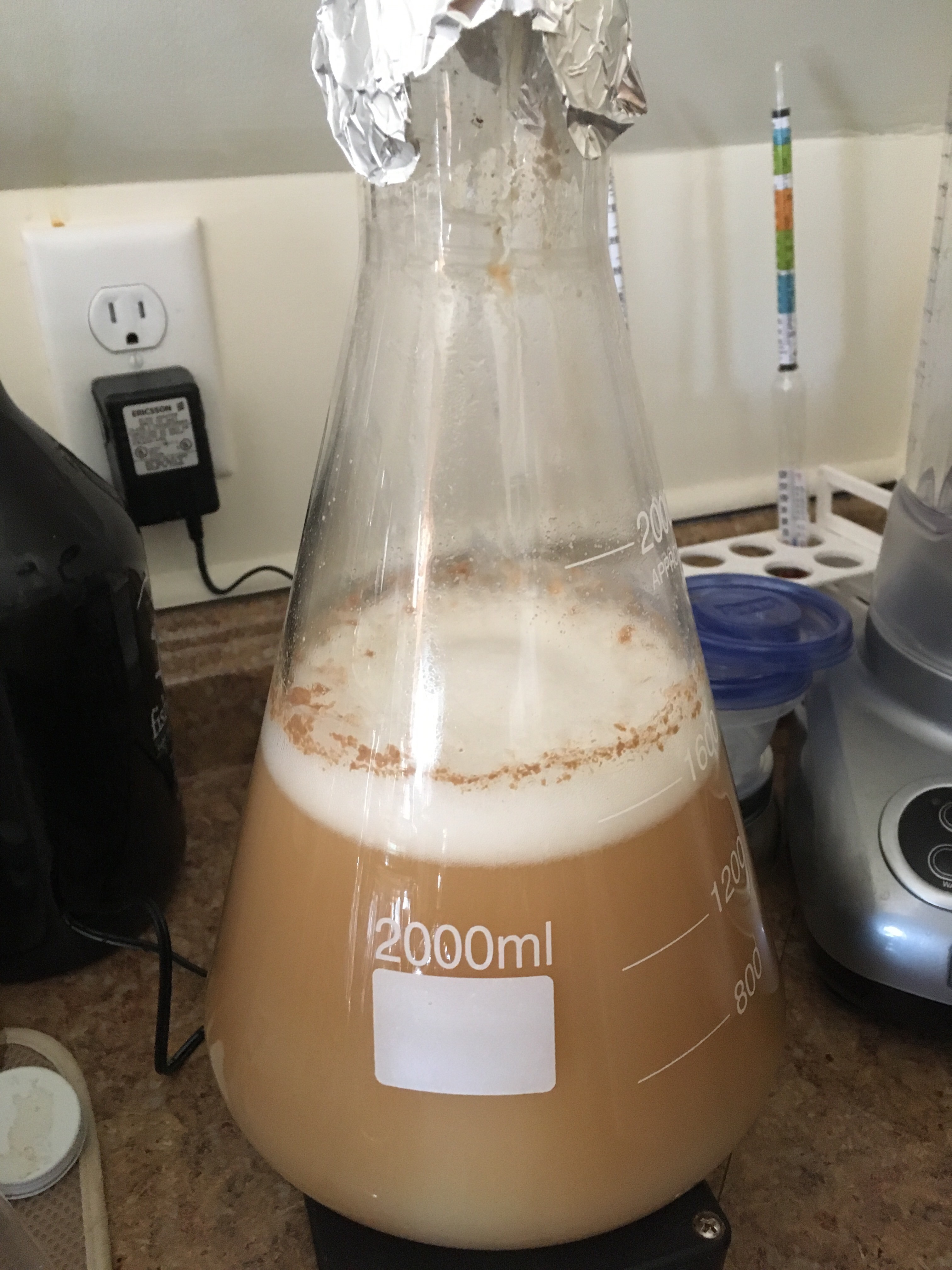
I wouldn't call this a clone of Broken Skull IPA, it's hard to clone I beer you have never tasted, but it is certainly inspired by it. Will this be a tasty and refreshing beer to drink at a Memorial Day Cookout? Hell yeah! And that's the bottom line, because the (would-be) brewmaster says so!
See the full recipe here.
Follow me on Twitter @JChalifour
Like The Would-be Brewmaster on Facebook
Share what beers you are drinking with me on Untappd
Tuesday, August 23, 2016
Brew Day: US of IPA – Flyover IPA (Midwest IPA)
The US of IPA is a project where I will brew four regionally inspired American IPAs. I will be pouring all four at the North Shore Brewers tent New England Homebrewers Jamboree. Jamboree is an event open to the public to benefit Make a Wish. Tickets are available here.
With the first three IPAs that I brewed I had a few concepts simple concepts to wrap my head around: New England IPA: hazy appearance, juicy hop flavor, soft mouthfeel; East Coast IPA: balanced with an English influence; West Coast IPA: blonde color and highly aromatic. Leaving the relatively new New England IPA to the side, Midwest IPAs are somewhere in the middle between an East Coast and West Coast IPA. Hoppy, but not the one-dimensional hop bombs you find on the West Coast. They are balanced and malty, but not usually as dark and caramelly as an East Coast IPA. Examples that you can buy in Massachusetts would be Anti Hero IPA by Revolution, Founders Centennial IPA.


Out of all of my IPA recipes, the Midwest IPA was the last to come together. Without a couple of bullet points I knew I needed to hit, I put off designing the recipe. During the Regional American IPA: What’s Up with All the Crystal Malt? seminar, Carrie Knose singled out Modus Hoperandi by Ska Brewing as a beer she always goes back to. I found a clone of Modus and used that as my starting point.

Modus is noticeably darker than most Midwest IPAs which is another reminder that these regional differences aren’t absolutes. There is no Maginot Line that once crossed IPAs become dramatically different. Since I want my beers to be representative of these regional differences, I went about lightening the color of beer. I still used 120L Crystal malt, but I lowered the percentage of the grist. To compensate for the loss in body and head retention from decreasing the crystal malt, I added a small amount of malted wheat. Whereas Broken Fist used Briess 2-row barley, I used Great Western 2-row. I also used some Vienna malt to add a light toasted quality. On brew day I threw in a few ounces of Weyerman Dark Munich malt when I was a couple ounces short of Caramel 120.
Once I had the malt color and flavor where I wanted in my head, it was time to focus on the hops; this is an IPA after all! When looking over the recipes for Broken Fist,
Haze for Daze, and Age of Sail I had a few great IPA hops I hadn’t used yet: Simcoe, Centennial, and Amarillo. Centennial is the single hop used in one of the great Midwest IPAs: Bell’s Two Hearted. Not available in Massachusetts, I always seek out Two Hearted when I am in a state that Bell’s distributes to. When I was struggling for ideas for a Midwest IPA, I thought about brewing a Two Hearted Clone. Needless to say Centennial is perfect for a Midwest IPA.
Simcoe is very sticky and piney. Simcoe is synonymous with West Coast IPAs, Pliny the Ender in particular. I used Simcoe for bittering, and judiciously later on to add complexity while trying to make sure it doesn’t throw off the balance. Amarillo is one of the most popular aroma hops used in IPAs. I added some at flameout, and will have Amarillo make up a plurality of the dry hops. Taking a cue from Carrie’s beer, there will be one dry hop for ten days.
For my yeast I was debating using a more balanced strain like Wyeast 1272, or trying to culture up Bell’s house yeast from Oberon bottle dregs. I went back through the Regional American IPA presentation slides and remembered that Carrie said that while her house strain is Dry English Ale, most brewers in the Midwest use Chico. Having had a bad experience with Dry English Ale fermenting at too high of a temperature, I wasn’t about to try again in the middle of August. Beyond that Chico made sense to me on a couple of levels. It is the most common yeast used in the Midwest; Dale Katechis of Oskar Blues said on Brew Dogs that it is their house strain. At its core Midwest IPA is a middle-of-the-road IPA. If I am going to brew a representative example, using a neutral yeast like Chico makes sense. I also had a free sachet of Mangrove Jack’s M44 (presumably their version of Chico) from Homebrew Con. With all of the brewing I have to do before Jamboree, being able to use a dry yeast means it’s one less yeast starter I have to worry about.

After missing my target volume on my last two three gallon BIAB batches, I adjusted my settings in BeerSmith and was right on the money with my target volume this time. If there is one thing I can take away from this project it has helped me dial in my system through sheer repetition. The only difficulty I had was chilling my wort. When the ground water is warm like it is in the summer there is less of a difference in temperature between the water you are using to chill your beer and the beer itself. I had to let the beer chill overnight before pitching my yeast. I ended up using a swamp cooler when I brewed Haze for Daze.
I almost had enough beer to fill the keg. I did a better job accounting for boil off, but didn’t account for hop absorption. I won’t be able to taste this beer until everyone else does at Jamboree.
Click here for the recipe.
Follow me on Twitter @JChalifour
Like The Would-be Brewmaster on Facebook
Share what beers you are drinking with me on Untappd
View the complete searchable Would-be Brewmaster Archive here.
from WordPress http://ift.tt/2bkZEQl
via IFTTT
Wednesday, March 22, 2017
Kräusening, never again! At least probably never again
There are some practices employed by commercial brewers that aren't necessarily practical for homebrewers. There are also traditional methods that were employed for various reasons that no longer make sense with modern brewing methods and ingredients. Kräusening arguably fits both.
Kräusening is the process of adding actively fermenting wort, at high kräusen, to an already fermented beer. German brewers bound by the reinheitsgebot couldn't use priming sugar to package their beer would frequently use this method. In addition to helping carbonate packaged beer, the most obvious is you can top off a batch with the fermenting wort. My original impetus to try kräusening was when my Anti-Chris and Sour-Chris both finished under five gallons.
Kräusening when the beer is conditioning in a secondary fermenter had and is said to have other benefits: the active yeast can help ensure a full attenuation and/or jumpstart a stuck fermentation, the active yeast can clean up off-flavors (which is why Budweiser is kräusened), and it can help reduce oxidation.
In a pale, dry, high gravity beer like Anti-Chris, all of these benefits are appealing. Last summer, the only beer out of the four I brewed for my US of IPA project that I racked to a secondary was Broken Fist. At Jamboree Dave from SoMe Brewing sampled Broken Fist off a keg and noticed it was oxidized. The portion of the batch that I bottled were even worse over time. The beer took on an ashy hue, while the hop flavor was flat and generally unpleasant. A big, boozy beer like Anti-Chris will need to condition in a secondary fermenter.
For a commercial brewer that brews the same beer often, kräusening can be fairly easy. It is as simple as rigging up a hose from a batch that is actively fermenting and topping off a batch in another tank. For a homebrewer it is not that simple.
The easiest way, and only way I could see myself ever kräusening again, is to boil a small amount of dry malt extract, pitching some yeast, and add to your carboy after a day or two. Another option that seems workable is to set aside a portion of wort and yeast from brew day, seal them, and then pitched the saved yeast into the same wort after you rack the main batch to a secondary, and then blend back in.
I didn't have the foresight to do the latter. Even if I did, I would be scared of contamination. Not wanting to alter my original recipe, I didn't want to go with the DME route. What I ended up doing was brewing a mini-batch of Anti-Chris, pitching yeast, and then using it to top off the other batches.

Adding the wort to a carboy allowed me to monitor what was going on inside the vessel. My mini batch ended up at only 1.5 gallons. I probably blended in at most 0.25 gallons into Anti-Chris. The rest went into Sour Chris. As Sour Chris is still in a plastic bucket, I couldn't see exactly what was going on, but there was plenty of airlock activity. The mini-batch should boost the overall ABV of Sour-Chris.
We'll see in another six weeks when Anti-Chris is ready to drink if this was worth the effort. We will also see if I unnecessarily infected, oxidized, or otherwise altered the flavor of the beer. I did have a small sample before racking. It was dry, bitter, and some of the hop flavor was present. with some time to let the hop bitterness mellow it seemed like it was on its way before I dumped this extra fermenting wort in there.
While working on this, I did settled on the blend of dry hops I plan to add. I am going to bottle the Anti-Chris and Pasteinator the weekend of April 15-16. That will give both beers three weeks to condition in the bottle before our club's competition.
Follow me on Twitter @JChalifour
Like The Would-be Brewmaster on Facebook
Share what beers you are drinking with me on Untappd
Kräusening is the process of adding actively fermenting wort, at high kräusen, to an already fermented beer. German brewers bound by the reinheitsgebot couldn't use priming sugar to package their beer would frequently use this method. In addition to helping carbonate packaged beer, the most obvious is you can top off a batch with the fermenting wort. My original impetus to try kräusening was when my Anti-Chris and Sour-Chris both finished under five gallons.
Kräusening when the beer is conditioning in a secondary fermenter had and is said to have other benefits: the active yeast can help ensure a full attenuation and/or jumpstart a stuck fermentation, the active yeast can clean up off-flavors (which is why Budweiser is kräusened), and it can help reduce oxidation.
In a pale, dry, high gravity beer like Anti-Chris, all of these benefits are appealing. Last summer, the only beer out of the four I brewed for my US of IPA project that I racked to a secondary was Broken Fist. At Jamboree Dave from SoMe Brewing sampled Broken Fist off a keg and noticed it was oxidized. The portion of the batch that I bottled were even worse over time. The beer took on an ashy hue, while the hop flavor was flat and generally unpleasant. A big, boozy beer like Anti-Chris will need to condition in a secondary fermenter.
For a commercial brewer that brews the same beer often, kräusening can be fairly easy. It is as simple as rigging up a hose from a batch that is actively fermenting and topping off a batch in another tank. For a homebrewer it is not that simple.
The easiest way, and only way I could see myself ever kräusening again, is to boil a small amount of dry malt extract, pitching some yeast, and add to your carboy after a day or two. Another option that seems workable is to set aside a portion of wort and yeast from brew day, seal them, and then pitched the saved yeast into the same wort after you rack the main batch to a secondary, and then blend back in.
I didn't have the foresight to do the latter. Even if I did, I would be scared of contamination. Not wanting to alter my original recipe, I didn't want to go with the DME route. What I ended up doing was brewing a mini-batch of Anti-Chris, pitching yeast, and then using it to top off the other batches.

I shot for a two gallon mini-batch. Both beers I was kräusening already had ample hop bitterness. I thought it would be fairly easy to do a small BIAB mash, boil my wort for 15 minutes just to ensure it was sterile, and pitch my yeast.
Unfortunately Anti-Chris employed a 90 minute mash, plus a 15 minute mashout. In addition to those steps, the time it took to heat my strike water, and time to cool the wort, the mini-batch took almost as long as a regular batch. While I was mashing i racked Anti-Chris to a carboy.
I pitched my yeast and after 12 hours there were signs of active fermentation. At around 24 hours I poured the fermenting wort into the carboy of Anti-Chris to top it off. In hindsight I really should have gently racked the beer with a siphon. Pouring the beer as I did only introduced more oxygen. Hopefully the active yeast gobbles it all up.
 |
| My initial batch was really close to 5 gallons. |
 |
| After pouring there was a thick krausen at the top of the fermenter. It quickly subsided. |
 |
| After 18 hours a new layer of krausen emerged. Hopefully it takes care of the oxygen I needlessly introduced. |
We'll see in another six weeks when Anti-Chris is ready to drink if this was worth the effort. We will also see if I unnecessarily infected, oxidized, or otherwise altered the flavor of the beer. I did have a small sample before racking. It was dry, bitter, and some of the hop flavor was present. with some time to let the hop bitterness mellow it seemed like it was on its way before I dumped this extra fermenting wort in there.
While working on this, I did settled on the blend of dry hops I plan to add. I am going to bottle the Anti-Chris and Pasteinator the weekend of April 15-16. That will give both beers three weeks to condition in the bottle before our club's competition.
Follow me on Twitter @JChalifour
Like The Would-be Brewmaster on Facebook
Share what beers you are drinking with me on Untappd
Tuesday, November 5, 2024
Ales over ALS 2024
After a successful showing that did not result in any awards in 2023, the 2024 Ales over ALS competition snuck up on me. By snuck up I mean I thought I was judging instead of brewing this year until I saw an email with my name listed as a brewer. I had to fire up my kettle for the first time in a couple of months and brew something.
I had no idea what I wanted to brew. The easy thing would’ve been a re-brew of Broken Fist which went over so well last year. I felt like I needed to bring something different. That, and I didn’t want to spend a ton of money on hops. Instead I chose to brew a beer I already purchased the hops for.
 |
| Color and clarity on point. |
The idea for this beer came to me several years ago when I was in Portland, Maine. I was visiting the Shipyard Brewery and browsing their excellent gift shop when a particular item caught my eye. They were selling tap handles of one of their legacy beers for only $10.
Friday, December 9, 2016
Tasting Notes – Catching up on past beers Part II
This is a belated Part II where I post some thoughts and reflections on beers I brewed in 2016. Click here for Part 1.
Salted Caramel Brown Ale – The other batch we brewed for Jamboree. Adding the actual salted caramel was an afterthought, which given the name of the beer was something of a problem. In a pinch I added Hershey’s caramel syrup and sea salt to taste when I kegged the beer. The beer didn’t have enough time to naturally carbonate in time for jambo. In the end the beer was a decent enough brown ale, with a slight hint of salt and caramel. I promised Jennie I would go back to the drawing board before brewing another salted caramel beer. I still have most of the keg in the basement. I think I will break it out for the North Shore Brewers holiday party in January. Rating 3 out of 5.
NSB SMaSH Base Malt – I jotted down some quick thoughts on the other SMaSH beers brewed by other club members. All of the beers were fairly boring, because the beer was designed to be boring. The point of the exercise was to taste the flavor contributions of various base malts.

The ingredient variable aside, having brewed basically the same recipe as several other brewers, my batch more than held its own. After my Galaxy IPA from the club’s single hop project finished overly dry last year, having this year’s club project beer be as solid as it was validates my brewing process as much as anything. I packaged the beer in four half-gallon flip-top growlers. I opened one at the club picnic. I brought two to jamboree to be served along with the club’s other SMaSH beers. I ended up dumping most of those when I needed to fill the growlers with leftover Broken Fist. Alas, I still have one growler left. Rating 3.75 out of 5.
Commonwealth v Chalifour – This was a tripel recipe I developed, that Andy and his brother AJ brewed. After rushing to have it ready for AJ’s 30th birthday party, we weren’t able to bottle the beer in time. Andy and I each kept four bottles, and gave the rest to AJ. I thought it was pretty good, if perhaps a little light for the style. Jennie said she got some sourness in the flavor. I didn’t really get it. I shared a bottle with the manager at the Modern Homebrew Emporium as part of my “liquid resume”. Plenty of esters from the Belgian yeast. Rating 3.5 out of 5.
Summer Somewhere 2016 – I had originally planned to bring this beer to Beans N Brews in June. However I let the beer sit in the secondary for too long before packaging, and it was not ready for the event. I ended up bringing bottles of Fort Dummer instead. I ended up bringing a keg of Summer Somewhere to AJ’s birthday party in lieu of the not-quite-ready Commonwealth v Chalifour.

The London Ale 1318 yeast definitely threw more fruit flavor into the beer than the Irish Ale 1084 I used in the 2015 version. The Styrian Bobek hops gave the beer more of a pilsner-type flavor. The beer tasted far more European than the citrus bomb that the 2015 version hopped with Galaxy was.
I brought a one gallon polypin to a North Shore Brewers meeting. The beer had fallen off considerably by then, but was still drinkable.

At AJ’s party there was a half-barrel keg of Samuel Adams Summer Ale and a quarter-barrel keg of Harpoon IPA. That my 3 gallon keg kicked that night is a point of pride. This is a beer I will brew every year. I might play around with different ingredients, but the bones of the recipe will never change. Rating 4.25 out of 5.
Fort Dummer – It’s never good when you find two ounces of hops in the freezer and realize they were supposed to go into the beer you just bottled. The batch was still pretty good. The folks at Beans N Brews enjoyed it even though they were expecting an English summer ale. When I drank it I kept thinking about the missing hops and in my mind the beer should have been better. When brewing four IPAs at once for my United States of IPA project, I made sure to pre-measure and label every dry hop addition to avoid making the same mistake again. Rating 3.5 out of 5.

Follow me on Twitter @JChalifour
Like The Would-be Brewmaster on Facebook
Share what beers you are drinking with me on Untappd
View the complete searchable Would-be Brewmaster Archive here.
from WordPress http://ift.tt/2hcABUD
via IFTTT
Wednesday, May 11, 2016
Brew Day: Summer Somewhere 2016 (British Golden Ale)
In 2015 I planned out my brews. I made a brewing schedule like a commercial brewer. Sure there were some tweaks along the way, but I basically decided what I wanted to brew for when months in advance. I got away from it later in the year when I got into more small-batch brewing.
This year after brewing BeerSmith's Dry Irish Stout, Pyrite Pistol, Banshee Breakfast Stout, and Dawson's Kriek, I've been winging it. I brewed Camp Randall Red for Barrell House Z's competition, Broken Fist IPA and Wisconsin Belgian Red for Memorial Day, but I have another event coming up I need to brew beer for.
Beans N Brews is a similar event to the New England Homebrewer's Jamboree. It is an opportunity for the public to sample homebrew and to support the All Are Welcome community kitchen. As the name suggests the event has an informal homebrewing competition and chili cook-off. Assuming the weather ever warms up, a refreshing summer ale is a perfect beer to bring to an outdoor festival in June.
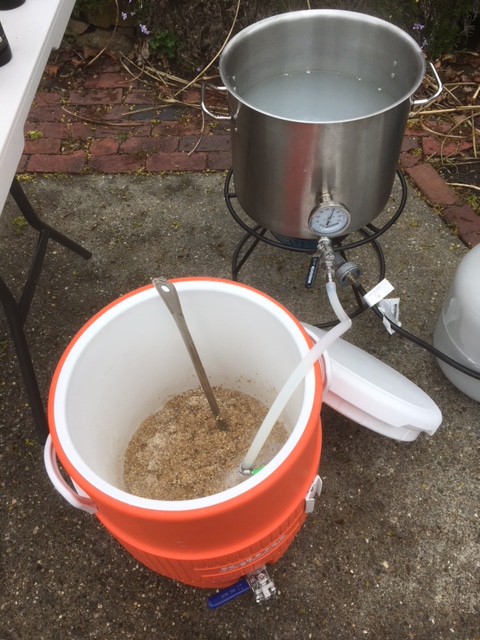
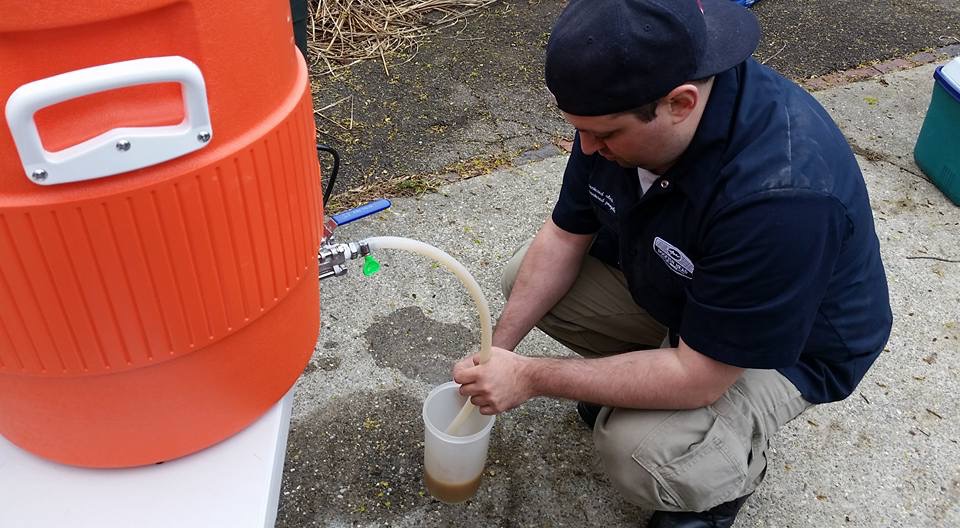
The North Shore Brewers had a beer camp on May 9 on National Homebrewing Day. This is where members of the club get together and actually brew together. Jennie is on board with any brew day that does not monopolize and mess up the kitchen. This also enabled me to brew a five gallon all-grain batch outside.
.jpg)
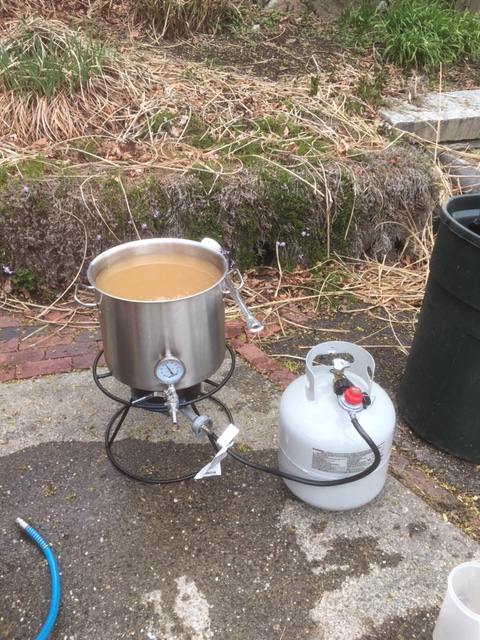
I already had a propane burner to brew outside that I received for free with a previous ingredient purchase. I picked up a propane tank at Dawson's in Beverly. I took advantage of a sale Beer and Wine Hobby in Woburn was having on National Homebrew Day to buy a brand new mash tun for 15% off. The mash tun is a round Igloo cooler with a false bottom. I have read this type of mash tun has better efficiency, meaning better extraction of fermentable sugars, than a cooler with just a screen like when I brew with Andy. I can bring this with me to his house for our next collaboration.
Loading and unloading the mash tun, burner, kettle, propane tank, ingredients, and beers I brought to share was a bit of a chore. It made me wish that when I bought a new car last year that I bought a hatchback or small SUV. Going to beer camps and other homebrew festivals makes me wish I had a bit more cargo space.
Last year I brewed Summer Somewhere with Galaxy hops. I always envisioned using a different hop every year. A British Golden Ale is a very interesting style. The malt bill is most similar to an International Pale Lager, it is hop forward like an American Pale Ale, all while traditionally using an English yeast. A few weeks back I was at the Modern Homebrew Emporium in Cambridge and noticed they had a bin of hops that were new to the shop. One variety that caught my eye was Bobek.
The description on the package said Bobek works in a variety of styles including ESB and lagers. That sounds ideal for a pale lager-like ale! Grown in Slovenia, they sound similar to Styrian Goldings, which is commonly used in Belgian Pale Ales and other Belgian styles. Styrian Goldings are actually English Fuggle hops grown in Slovenia.
After using 1318 London Ale III in the latest batch of Fort Dummer, it was easy to build up a starter for this batch. The malt is basically the same, except I switched up the base malt with the lightest English base malt I could find locally.
I expect the 2016 version to have a more floral and earthy hop flavor, than the assertive passion fruit flavor the 2015 version hopped with Galaxy. London Ale III is decidedly fruitier than Irish Ale, which will add some complexity.
With a five gallon batch I can keg three gallons for Beans 'N Brews, and bottle the rest for the summer.
Click here for the recipe.
Follow me on Twitter @JChalifour
Share what beers you are drinking with me on Untappd
Subscribe to:
Posts (Atom)