This Saturday is Learn to Homebrew Day. As regular readers of this page will know, we planned on having a Learn to Homebrew Day event, but it was eventually cancelled due to a forecast with a 90% chance of rain and 23 MPH winds. Kind of makes brewing outside problematic.
The plan was to brew a 10 gallon, all-grain batch of a special beer I came up with last year in honor of our grandfather who died after a long battle with Parkinson's. We would have been using equipment and techniques including a mash-tun, a large boil kettle, propane burner, grain mill, wort chiller and a huge yeast starter that would be a bit much for a first time brewer. In the spirit of Learn to Homebrew Day, I decided to develop a simplified version of the recipe that requires nothing more than a basic starter kit you can pick up at a local hombrew shop like Beer & Wine Hobby or online, and other items most people have in their kitchen already.
When I started the blog I decided early on not to make this a "how to" type of blog. John Palmer and Charlie Papazian are infinitely more qualified than I am to teach and explain the brewing process. Instead I took a similar approach to James Watt and Martin Dickie on the TV show Brew Dogs. Watt and Dickie brew what they brew, and if there is a process or concept that they feel warrants additional explanation, they will explain it as they go. That is what I have always tried to do considering that the blog is hosted on a newspaper website and most of my Facebook fans aren't homebrewers.
Friday, October 31, 2014

Friday, October 24, 2014
Brew Day: Hot Stove Porter (Robust Porter)
They may not have been the two best beers I had this summer, but they were the two beers that got my wheels spinning as a brewer. Riverwalk Brewing's Screen Door, which I had when I visited the brewery, and Wanderlust by Foundation Brewing in Portland, ME took your traditional summer wheat beer and turned it on its head. Instead of using citrus, these beers tasted like a summer ale using no citrus. Screen Door was dry-hopped with Cascade hops, Wanderlust used citrusy American hops and if I remember correctly saison yeast to give the beer added complexity.
By the time I had these beers it was too late for me to brew another summer beer. Instead what I set out to do was apply these lessons to a winter beer. The winter might be my least favorite season for beer. There are too many beers out there that are too heavy and overly spiced. Thank god for Great Divide's Hibernation Ale, the best Old Ale I've had made in the US, and Celebration Ale which proves a superlative IPA is appropriate in any season.
 |
| Winter is hot stove season. And I have no pics from this brew day. |
By the time I had these beers it was too late for me to brew another summer beer. Instead what I set out to do was apply these lessons to a winter beer. The winter might be my least favorite season for beer. There are too many beers out there that are too heavy and overly spiced. Thank god for Great Divide's Hibernation Ale, the best Old Ale I've had made in the US, and Celebration Ale which proves a superlative IPA is appropriate in any season.
New toys! Yeast stir plate
Just like my grain mill and wort chiller, this should be a lifetime investment that will improve the quality of my beers immediately and as long as I brew. After doing a couple yeast starters for recent batches, and only using yeast that has never been used in another full batch, I have found that doing it is not as much of an inconvenience as I thought and I think it will lead to better beer.
Let's start at the beginning. Yeast are living beings like us, and as such they need oxygen. The more oxygen they have, the healthier the fermentation, and the more the yeast will reproduce additional cells. For a healthy fermentation of your wort you need to make sure that you pitch (add) enough healthy yeast cells. If you don't have enough yeast you may experience: infected finished beer, higher than normal final gravity, excess production of objectionable flavors caused by fusel alcohols, esters, diacetyl and sulfur compounds. I assure you all that stuff is bad.
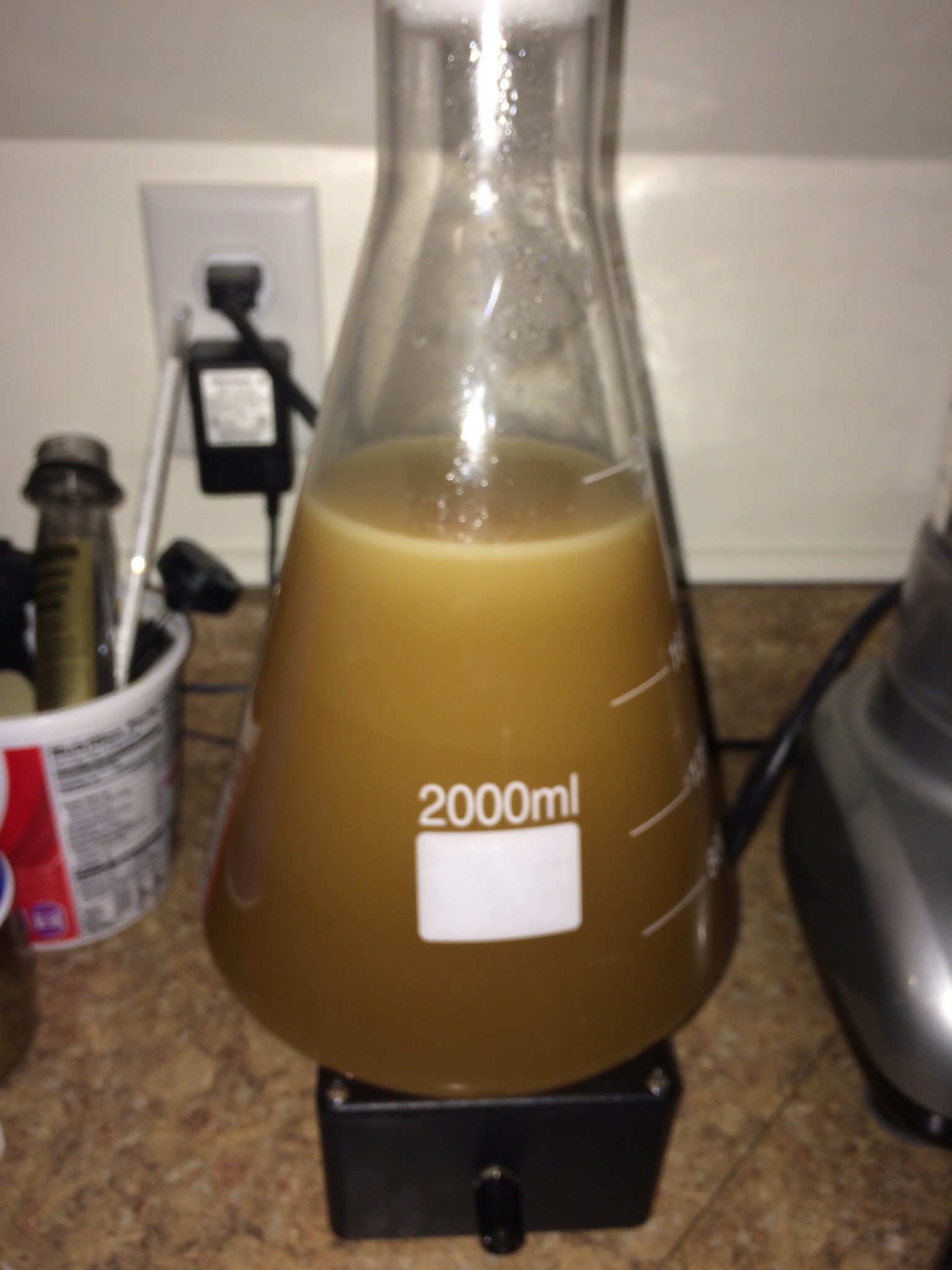 |
| No more 1 gallon yeast starters! |
Let's start at the beginning. Yeast are living beings like us, and as such they need oxygen. The more oxygen they have, the healthier the fermentation, and the more the yeast will reproduce additional cells. For a healthy fermentation of your wort you need to make sure that you pitch (add) enough healthy yeast cells. If you don't have enough yeast you may experience: infected finished beer, higher than normal final gravity, excess production of objectionable flavors caused by fusel alcohols, esters, diacetyl and sulfur compounds. I assure you all that stuff is bad.
Tuesday, October 21, 2014
You are only limited by your imagination
When you brew your own beer you are only limited by your imagination. When brewing the beer itself you can use any ingredient you want. A commercial brewer has logistical and legal issues that a home brewer does not. Using 12 types of malt, 10 varieties of hops would be a logistical nightmare for a brewer brewing on a commercial scale. I was able to brew a Ballantine IPA clone using traditional ingredients that Pabst either could not use or chose not to use. You can also use ingredients that a commercial brewer can't use. Do you want to add Jameson to your Irish Stout? You can, but it is illegal for a commercial brewer to add hard alcohol to a beer.

Brewing the actual beer is only the tip of the iceberg. How often in life do you get to name things? The only examples that come to mind right away are boats, pets, and children. The last one could very well grow up and change his/her name anyway. As our first batch fermented, there was a protracted debate as to what our home-brewery would be called. My original idea was Danvers River Brewing. For most of my life I have lived or worked in communities along the Danvers River, so the name felt appropriate. My girlfriend hated it, along with the next ten ideas I came up with. Since we both love baseball we toyed around with baseball themed names until we settled on Bleacher Brewing Company.
Brewing the actual beer is only the tip of the iceberg. How often in life do you get to name things? The only examples that come to mind right away are boats, pets, and children. The last one could very well grow up and change his/her name anyway. As our first batch fermented, there was a protracted debate as to what our home-brewery would be called. My original idea was Danvers River Brewing. For most of my life I have lived or worked in communities along the Danvers River, so the name felt appropriate. My girlfriend hated it, along with the next ten ideas I came up with. Since we both love baseball we toyed around with baseball themed names until we settled on Bleacher Brewing Company.
Subscribe to:
Posts (Atom)