Friday, January 9, 2015

Drink what you like and ignore perception

This week there have been several articles that have made waves in the craft beer world. Boston Magazine had an article about how craft beer has left Samuel Adams behind. Local homebrewer Vinny Mannering wrote a rebuttal to the article taking issue with those who called Sam products "mediocre" which went viral on social media. In another article, the founders of West Coast craft beer pioneers Widmer Brothers and Deschutes lamented the fact that as they have grown in size, the perception some have of their beers have changed.

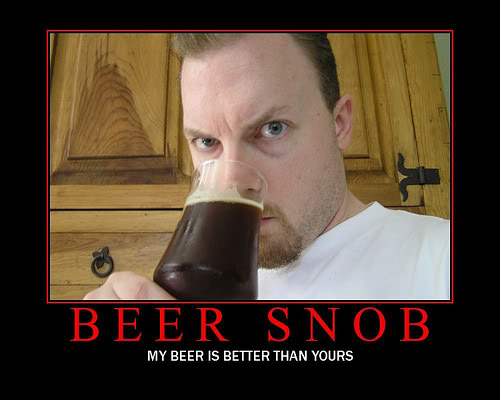
beersnob

If a beer is well made, it is well made. I don't care if it is a homebrew, a local nano-brewery brewing out of a garage, a "too big to be cool craft" brewer, or even a macro from AB InBev. People who won't drink or say a Boston Lager or Guinness Draught suck because of their own preconceptions just shouldn't be taken seriously. If you have valid and informed reasons why you don't like a beer I have no issue with it. There is a reason why stores, bars, and restaurants have more than one beer in stock. Too many beer drinkers can't or won't; sadly asking people to be honest and open-minded is often too much to ask for.

Tuesday, January 6, 2015

Brew Day: Walk-Off White (Witbier)

Today witbier is a popular craft (and crafty) beer style. In contrast to IPAs that are almost ubiquitous, witbier is very lightly hopped. Perhaps that's why macro-brewers choose witbier as the flagship of their crafty brands like Blue Moon and Shock Top. The low level of hopping saves money on ingredient costs.

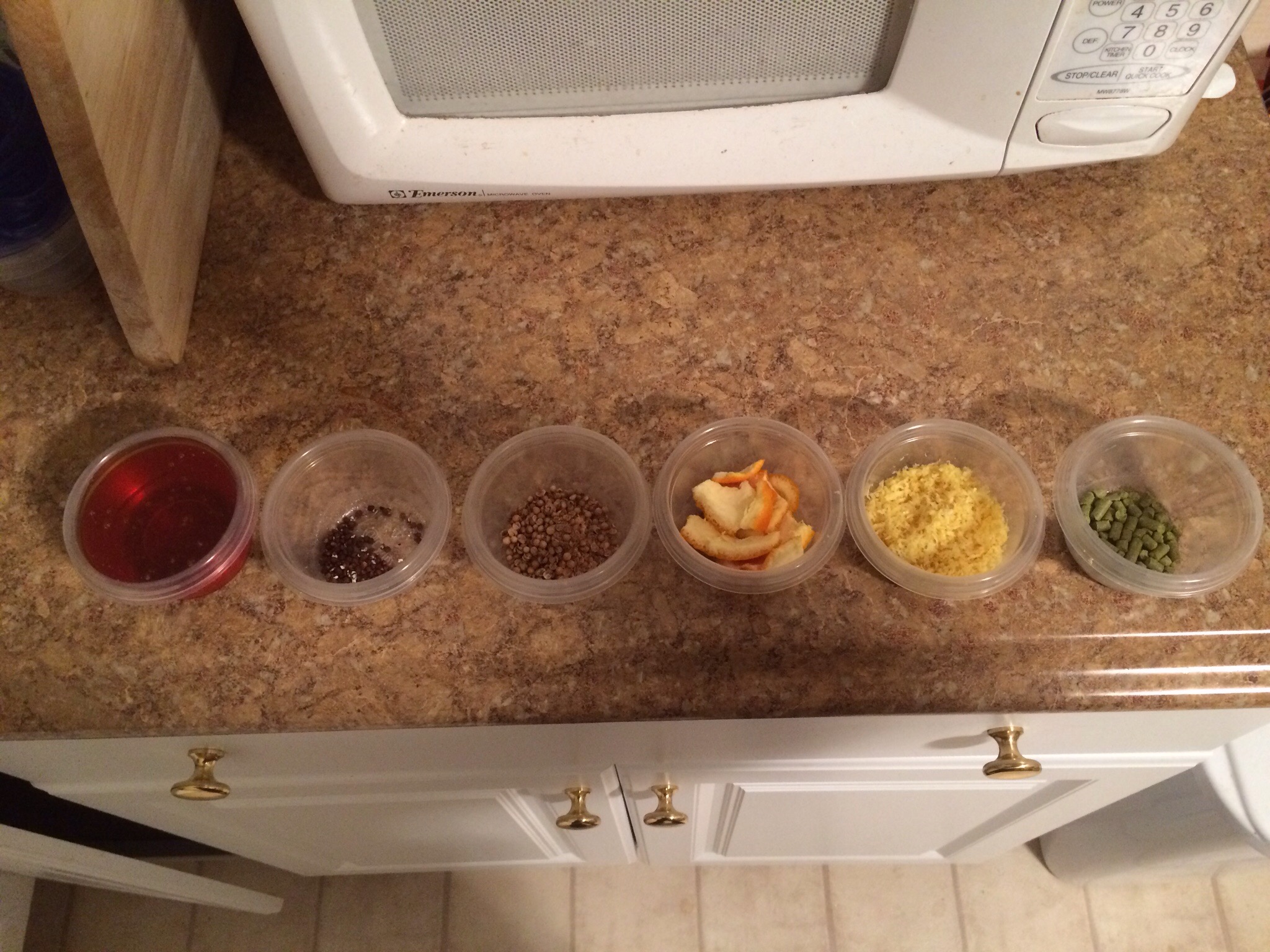
IMG_1385.JPG
L to R: honey, seeds of paradise, coriander, orange peel, lemon zest, Glacier hops.

The style was on the brink of extinction until Pierre Celis started his own brewery in the Belgian village of Hoegaarden and revived the style. The style has grown and evolved in the US since then. There are traditional examples like Allagash White; cleaner, more American examples like Harpoon UFO White; and Lienenkugel's Sunset Wheat, which is actually a lager and has none of the yeast flavors traditionally found in the style. The common thread is the low hopping, use spices to compensate for the lack of hops (typically coriander and orange), and the use of pale malts with a high percentage of unmalted wheat. The proteins in the wheat, and low to medium floccuation of traditional ale yeasts give the beer its cloudy, almost white appearance.

Friday, January 2, 2015

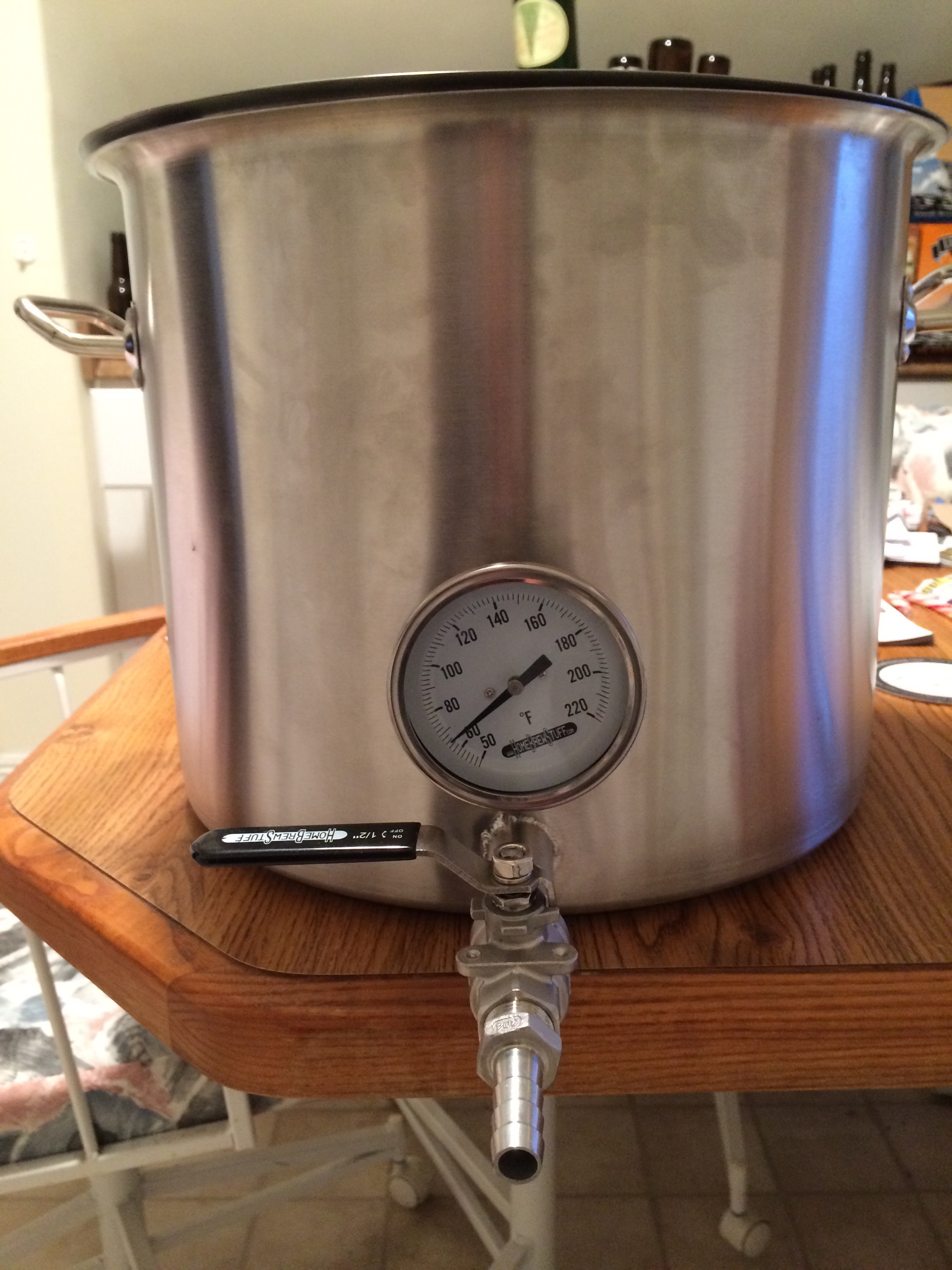
New Toys: I finally have a big boy kettle!

When I first started brewing with malt extract syrup and a small amount of steeping grains I purchased a 3 gallon stock-pot. This worked perfectly well for extract batches while matching the rest of my top-of-the-line Target Brand Chefmate cookware. It is still the kettle I use for my one gallon batches and has other uses like collecting milled grains and heating up sparge water when needed.

Still haven't been able to tighten the thermometer enough so it is straight

After a few months I wanted to make better beer and learned the importance of boiling as much of the wort as possible. I also wanted to start partial-mash brewing. Anything over 2-3 pounds of grain was too much for the 3 gallon pot, so I upgraded to this 5 gallon pot as my main kettle. This has worked well for two years, but I have outgrown it.

Wednesday, December 24, 2014

Tasting Notes: Hot Stove Porter (Robust Porter)

If you have ever been to the Samuel Adams brewery in Jamaica Plain the first thing that becomes evident is how small it actually is. On the tour, the tour guides acknowledge that almost all of the Samuel Adams products sold at the packie are in fact brewed at facilities in Pittsburgh and Ohio. The Boston Beer company only leases a portion of the old Haffenreffer Brewery which acts as their corporate headquarters and the site of their test brewery.

IMG_0680.JPG
A decent first attempt at what I was going for.

Developing and perfecting a recipe takes lots of trial and error. For the Hot Stove Porter I started with a blank slate and used several ingredients for the first time: malted oats, several of the hop varieties, and the yeast strain. It is one thing to have an idea of how all these different flavors would compliment each other in the final beer, it is another to see it in action.